


Meg Van Deusen

How to Reduce Stress – Three Simple Ways

Being constantly connected can leave us feeling constantly on call. I share three practical boundaries around technology—designated off times, scheduled message checks, and device-free spaces—to make more room for rest and undivided attention.

Read article

Nature as a Stress-Reliever

A tree, a stretch of sky, or even a photograph of a landscape can offer a pause from daily demands. I explore how nature’s beauty and sense of scale can bring comfort, connection, and a wider perspective on our worries.

Read article

What is Mindfulness?

Mindfulness means paying attention to the present with curiosity and without judgment. I explore how observing our thoughts and feelings can change our response to stress, along with a simple breathing practice to get started.

Read article

Children and Stress

Loving relationships help children weather stress, but even well-supported kids can struggle under pressure to achieve. I explore the role of secure attachment and how parents can help children feel valued beyond grades, accomplishments, and status.

Read article

The Difference Between Anxiety and Stress

Stress and anxiety can feel similar in the body, but the experiences behind them may differ. Through everyday examples, I explore reactions to immediate threats, worries about the unknown, and feelings we have yet to acknowledge.

Read article

Can A Positive Event Be A Cause Of Stress?

A wedding, a promotion, or a move can be welcome and unsettling at the same time. I explore why positive changes can bring stress and how patience, reassurance, and room for mixed feelings can ease the transition.

Read article

Coping with Loneliness – Lost In Translation

The unlikely friendship in Lost in Translation offers a window into the relationship between loneliness and insomnia. I reflect on how setting aside judgment and sharing something genuine can help us feel less alone and more at ease.

Read article
Chromosome Telomeres: What’s Sleep Got To Do With It?

What might the protective caps on our chromosomes tell us about sleep and stress? I look at research linking telomere length with sleep quality and explore why meditation and self-compassion have drawn researchers’ attention.

Read article
From Insomnia to Better Sleep – Are We Trying Too Hard?

As sleep gadgets multiply, are we getting closer to understanding why we cannot sleep? I question the search for a technological fix and consider whether the answers may lie closer to home, in our habits and emotional lives.

Read article
Insomnia Tips and Answers – The Shared Bed

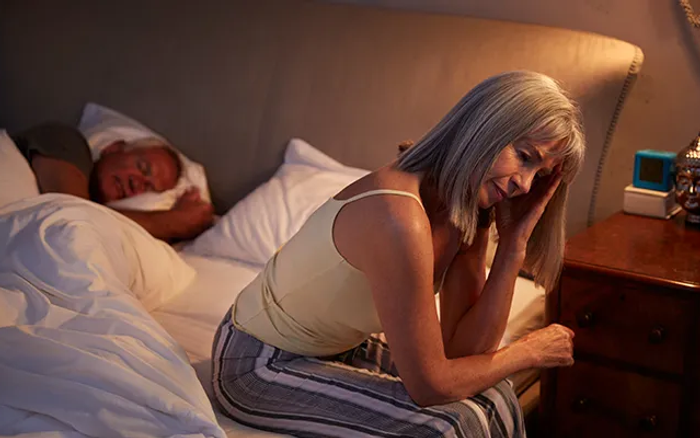
Why does sharing a bed soothe one person and keep another wide awake? Through two contrasting experiences, I explore how attachment styles, relationship harmony, and a sense of safety can influence sleep beside a partner.

Read article

Depression and Insomnia: A Sleep Story

Ernesto spends his days caring for others while struggling with depression and years of disrupted sleep. His story offers a personal look at how these difficulties intertwine and raises questions about caring for ourselves as well as those around us.

Read article
Why Do We Sleep?

Sleep may look like doing nothing, but the brain and body remain busy. I explore what research on sleep deprivation reveals about restoration, immune function, mood, and why rest is essential to our well-being.

Read article

All writing

Insomnia Tips and Answers – The Shared Bed

Why does sharing a bed soothe one person and keep another wide awake? Through two contrasting experiences, I explore how attachment styles, relationship harmony, and a sense of safety can influence sleep beside a partner.

Insomnia Tips and Answers: Looking at the issue of the shared bed.

Kelly couldn’t sleep with her partner. Every creak in the bed frame when Kelly’s girlfriend shifted herself to every breath of air Angela breathed, the sensory stimuli was enough to drive Kelly crazy. She would just begin to drift when, “jiggle jiggle.” Kelly’s eyes would pop open, her heart rate would increase as she was yanked from a hypnogogic state of slumber into full on wakefulness. Angela had readjusted her sleeping self and it was too much for Kelly to bear. She didn’t want to share her bed.

Two miles away, Terry couldn’t sleep without her partner. She’d have a couple of glasses of wine, pop two benydryl, take a bath and read her book, but nothing! Without Ted with her she felt uneasy, alone and, as a result, became extra vigilant of her surroundings.

Was her boss going to reprimand her tomorrow for not having finished that document? Will Ted get bored with her and eventually find another woman? Wait…is that someone breaking in downstairs? When Ted was present, however, Terry felt safe and secure. His presence cast a peaceful feeling over her life, as if everything was going to be okay. She wrapped herself in his arms and slept like a baby.

How is it that Kelly and Terry could have such polarized experiences when sleeping with their partners? It’s not as if Kelly’s partner snored like a freight train and kept her awake for obvious reasons. Angela was a quiet sleeper, really, and turned minimally in bed. Ted, on the other hand, was a big guy and took up quite a portion of the bed. But instead of disrupting Terry’s sleep, he seemed to induce it.

Depending on one’s attachment style, a person may either be bothered or soothed by a bed partner. Attachment styles are ways in which we learn to be in relation to other human beings. Our individual attachment style is usually influenced by how our parents responded to us when we were babies. Were they attuned to our needs, smothering, critical or absent?

Depending on our experience, we may feel secure in the presence and closeness of others, avoidant of the presence and closeness with others or anxiously search for the presence or closeness of others.

In Kelly’s case, her heightened sensitivity and fear of being hurt by people based on early childhood experiences, left her uneasy when sharing a bed with her girlfriend. She was anxious, but resistant. On the other hand, Terry’s mother was critical and abandoning of her. Terry longed to feel loved and needed the validation of her boyfriend’s presence to feel secure. She had an anxious attachment.

In 2007 Troxel, Robles, Hall and Buysse published a paper in Sleep Medicine Reviews (Troxel et al, (2007) 11) that summarized the research on relationship quality and sleep. They found three studies that showed statistically significant associations between attachment insecurity and subjective sleep quality.

One study in particular (Carmichael and Reis, Health Psychology, 2005) demonstrated that those with anxious attachment styles (like Terry) reported poorer sleep quality in general. This outcome was echoed more recently by Pagliani et al, at the Sleep Conference in June, 2016.

Their research showed that out of 43 subjects those with an insecure attachment style (those who “seem uncomfortable with relationships or depend on them”) had insomnia. In addition, Troxel et al found that relationship harmony was an important predictor of sleep quality as well. In other words, regardless of one’s attachment style, the more copacetic the relationship, the better one would sleep.

Both Kelly and Terry are anxious women. However, Kelly’s attachment style is characterized as anxious-avoidant whereas Terry’s is just plain anxious.

This may be why Kelly couldn’t sleep with her partner and Terry could only sleep with her partner. In Kelly’s case, she was acutely aware of Angela’s presence which, in some way, posed a threat to her. She then began to ruminate about every breath Angela took as a disturbance to her (Kelly’s) well-being. She was anxious (hypervigilant) but avoidant (she wanted to distance herself from Angela.) Terry just needed the validation that her boyfriend’s presence indicated. In other words, if he’s here with me, he’s not with someone else. If he’s here with me, I’m protected and safe.

To add fire to fire. Kelly and Angela weren’t doing that well. They argued frequently and lately there had been daily tension between them. To have an anxious-avoidant attachment style and to have relationship strife, puts one at risk for chronic insomnia.

Indeed, Troxel et al’s review of the literature found that relationship quality could impact a person’s hypothalamic-adrenal-pituitary axis, which when dysregulated, seems to increase risk for insomnia. They also found that a person’s autonomic nervous system in which blood pressure and plasma catecholamine levels rise is affected by marital conflict, thus potentially disrupting sleep.

Last, a person’s proinflammatory state seems to fluctuate according to relationship conflict. Certain sleep modulating cytokines (inflammatory markers) are elevated in the body when couples demonstrated hostile behavior to each other.

All of this said, here are some staggering facts from a 2012 survey by The Better Sleep Council:

  • 25% of partnered adults say they sleep better alone than with their partner
  • 63% of couples sleep most of the night separated (including in the same bed, but clinging to opposite corners)
  • Women are more sensitive to their sleep environment than men (60% vs. 48%)
  • The older we get the less likely it is that we will sleep closely with our partners

Insomnia Tips and Answers: Conclusion

My practice seems to echo the research. That is, while most adult Americans have a bed partner, whether that partner’s presence is an asset or a hindrance to the other’s sleep seems to depend on whether the partner has an environmentally disturbing sleep disorder, whether the person is in a harmonious vs discordant relationship with the partner and with which attachment style the person embodies to navigate life.