


Meg Van Deusen

How to Reduce Stress – Three Simple Ways

Being constantly connected can leave us feeling constantly on call. I share three practical boundaries around technology—designated off times, scheduled message checks, and device-free spaces—to make more room for rest and undivided attention.

Read article

Nature as a Stress-Reliever

A tree, a stretch of sky, or even a photograph of a landscape can offer a pause from daily demands. I explore how nature’s beauty and sense of scale can bring comfort, connection, and a wider perspective on our worries.

Read article

What is Mindfulness?

Mindfulness means paying attention to the present with curiosity and without judgment. I explore how observing our thoughts and feelings can change our response to stress, along with a simple breathing practice to get started.

Read article

Children and Stress

Loving relationships help children weather stress, but even well-supported kids can struggle under pressure to achieve. I explore the role of secure attachment and how parents can help children feel valued beyond grades, accomplishments, and status.

Read article

The Difference Between Anxiety and Stress

Stress and anxiety can feel similar in the body, but the experiences behind them may differ. Through everyday examples, I explore reactions to immediate threats, worries about the unknown, and feelings we have yet to acknowledge.

Read article

Can A Positive Event Be A Cause Of Stress?

A wedding, a promotion, or a move can be welcome and unsettling at the same time. I explore why positive changes can bring stress and how patience, reassurance, and room for mixed feelings can ease the transition.

Read article

Coping with Loneliness – Lost In Translation

The unlikely friendship in Lost in Translation offers a window into the relationship between loneliness and insomnia. I reflect on how setting aside judgment and sharing something genuine can help us feel less alone and more at ease.

Read article

Chromosome Telomeres: What’s Sleep Got To Do With It?

What might the protective caps on our chromosomes tell us about sleep and stress? I look at research linking telomere length with sleep quality and explore why meditation and self-compassion have drawn researchers’ attention.

Read article
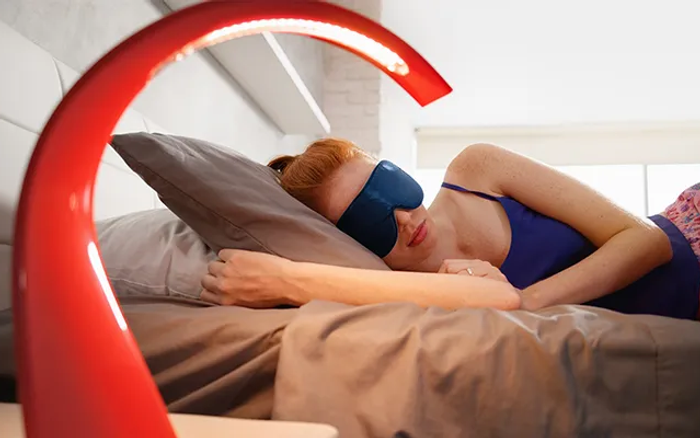
From Insomnia to Better Sleep – Are We Trying Too Hard?

As sleep gadgets multiply, are we getting closer to understanding why we cannot sleep? I question the search for a technological fix and consider whether the answers may lie closer to home, in our habits and emotional lives.

Read article

Insomnia Tips and Answers – The Shared Bed

Why does sharing a bed soothe one person and keep another wide awake? Through two contrasting experiences, I explore how attachment styles, relationship harmony, and a sense of safety can influence sleep beside a partner.

Read article

Depression and Insomnia: A Sleep Story

Ernesto spends his days caring for others while struggling with depression and years of disrupted sleep. His story offers a personal look at how these difficulties intertwine and raises questions about caring for ourselves as well as those around us.

Read article

Why Do We Sleep?

Sleep may look like doing nothing, but the brain and body remain busy. I explore what research on sleep deprivation reveals about restoration, immune function, mood, and why rest is essential to our well-being.

Read article

All writing

How to Reduce Stress – Three Simple Ways

Being constantly connected can leave us feeling constantly on call. I share three practical boundaries around technology—designated off times, scheduled message checks, and device-free spaces—to make more room for rest and undivided attention.

Decrease Your Stress in a World of Technology and Information Overload

How can you reduce your stress? Smartphones, tablets and laptops, oh my! Most of us in the modern world have developed an extra appendage.

Like the lions, tigers and bears that lurked in the forest in the Wizard of Oz, these appendages have a threatening presence we can’t quite escape.

Glued to our computers or forever fiddling with our phones, we are constantly aware of our devices, anxiously drawn to them and simultaneously feeling held hostage by them.

You know what I’m talking about. You can’t go anywhere without your phone. “Where’s my phone, I need my phone.”

Or, you get into an elevator with five other people and the majority whip out their devices and pretend to do something on them instead engaging you in conversation.

While those prone to anxiety are more likely to use the device as a coping mechanism, the mindless fiddling increases the chance of device addiction. And device addiction will increase stress, not decrease it.

Implementing Boundaries

Here are three ways to implement boundaries around technology and information overload that can protect you from experiencing stress as well as reduce existing stress.

How to Reduce Stress:
1. Designate “Off” Times

Decide on three times during the day and night in which your laptop, tablets and smartphones are all turned off.

Because we know devices in the “on” position mess with the quality of our sleep, nighttime is a good place to start. Ideally two hours before bed (but try one hour before bed if two seems impossible right now), turn off all devices. I don’t mean put them in sleep mode. I mean power off all devices.

Keep them off until 30 minutes after you rise in the morning. There is your first off period—nighttime.

Now you can incorporate two other “off” periods in the day: lunch time or two hours in the afternoon or dinner time. Whatever you decide, apart from nighttime, try to make each “off” time at least two hours.

“But what if there is an emergency and my family can’t reach me?” This is why I advocate for keeping the land line. It may seem like an extra expense you don’t need, but it will be a life saver if it saves you from device addiction, insomnia, and social anxiety.

“But I use my phone as my alarm.” Invest in a cheap alarm clock. They always worked before and still work now.

“That’s impossible. I use my computer for work and work a lot.” Then maybe you’re working too much or maybe you need to schedule your “off” times while you sleep, while you eat, while you do personal chores or while you socialize.

How to Reduce Stress:
2. Designate Time Frames

Designate time frames in which you check email, social media and text messages. Stop once you’ve reached the end of the time frame: You can decide to check messages between the hours of 8am and 5pm, for example or between the hours of 7am and 12pm and then again from 2pm to 6pm. This gives you a clear break from information overload. We’re all uber available these days and, therefore, have become slaves to our online presence. You can change this.

“But what if I miss out on an event that my friends are doing last minute because they invited me after I stopped checking messages.”

Oh, well, you get some peaceful time with yourself that evening which can help increase self confidence and decrease stress. You can also inform friends of your messaging hours. If the invitation is that important, they’ll remember to get to you before your messaging day ends.

“But I use my device to communicate with others if I’m running late or if we are trying to meet in a well-populated place.” It may take a little longer, but you’ll find your friend. I like to give the example of when my friend, who lived in France at the time, and I, who lived in Austria at the time decided to meet in on a beach in Santorini, Greece at a designated day and time. We had made the arrangements via post mail some weeks prior. I remember getting to the beach and thinking, “this is a long beach.” As I started walking, I noticed in the distance, my friend walking toward me. We found each other without computer, tablet or smartphone assistance.

How to Reduce Stress:
3. Create Device-Free Zones

If devices are out of sight, they’ll be out of your hands and more likely to even be out of your mind. What a relief that would be.

For example, more than just making sure there are no devices at the dinner table (which should be a given in my mind), make sure there are no devices in the bedroom or the bathroom or the car!

You need “device-free zones” in order feel truly stress-free. Devices as appendages weigh us down. At first, removing your devices from designated areas could feel uncomfortable, but eventually you’ll be more attuned to your actual environment than caught in a virtual world.

“But I have a small apartment and if my phone rings I’ll likely get it and want to talk on it where I was previously reading or relaxing.” There is no reason you can’t talk on your smartphone where you left it. If that is in a closet, then talk on it there. The conversation may be shorter, but that’s okay too. Remember, we’re trying to increase real time alone and real time with one another face to face (and I don’t mean FaceTime.)

“Sometimes I need to be efficient and work while I cook. If my device is in the office, I can’t do that.” We’re trying to create a less stressed existence. Multi-tasking is a stressful existence so it’s really okay to cook and only cook, then when finished cooking to work and only work. Be fully present wherever you are and life will feel more vibrant and less overwhelming.

How to Reduce Stress: Conclusion

This is the reality. We are living in a time of technology addiction and information overload. We are stressed out with all we must do.

The illusion is that we’ll be able to conquer this sense of overwhelm if we always have our devices with us. The illusion is we’ll get more done with our devices than without them.

However, trying to answer emails and simultaneously feed your baby, only creates further human disconnection, which, in turn, creates more stress and anxiety.

Practicing the three stress-relieving techniques above is lifestyle-changing, which can be hard, but they are also life-enhancing which will be relieving.