

Meg Van Deusen

Have National Election Results Kept People Up at Night?

In the aftermath of the 2016 election, many people described feeling too unsettled to sleep. I explore how uncertainty and a shaken sense of belonging can fuel vigilance, and how compassionate action may help restore a sense of security.

Read article
Broken Sleep

Does the number of hours we sleep tell the whole story? I explore research on interrupted sleep, inflammation, and stress, asking why sleep quality and emotional well-being deserve attention alongside sleep duration.

Read article

About Insomnia and Fear of the Dark

Night can stir fears about both the world around us and the parts of ourselves we do not fully understand. Drawing on history and Jungian psychology, I reflect on vigilance, dreams, and finding greater comfort in the dark.

Read article

Sleep and Attachment Style

The ways we seek closeness and respond to separation may follow us into bed. I explore how attachment patterns, daily stress, and the reassurance of dependable relationships can shape our ability to settle into sleep.

Read article
Insomnia Sleep Aids: Gadgets and Gizmos

After walking the maze of sleep gadgets and supplements on display, I consider what these costly aids promise, what they actually deliver, and whether simple, evidence-based changes might be the more powerful cure.

Read article
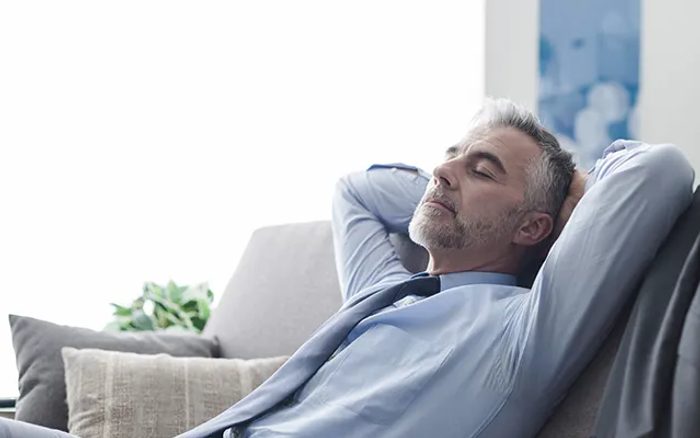
Daytime Naps: To Nap or Not To Nap

Are daytime naps restorative or disruptive? I explore what the research says about siestas, chronotypes, and sleep cycles to help you decide whether napping supports—or sabotages—your nighttime rest.

Read article
How to Deal with Insomnia: Part 2

How a mindfulness-based approach can help loosen insomnia’s grip by teaching us to notice, detach from, and gently redirect the worried thoughts that keep us awake.

Read article
How to Deal with Insomnia: Part 1

What insomnia really is, why it develops, and how mindful awareness and evidence-based interventions can begin to break the exhausting cycle of sleeplessness and worry.

Read article
Short Sleep Duration: Myth or Fact?

Is six hours of sleep is truly enough? What does the science reveal about the hidden physical and cognitive costs of chronic sleep restriction?

Read article
Sleep Deprivation: A Pervasive Phenomenon

Exploring the personal, cultural, and biological forces quietly driving our growing national crisis of sleep deprivation.

Read article

All writing

Daytime Naps: To Nap or Not To Nap

Are daytime naps restorative or disruptive? I explore what the research says about siestas, chronotypes, and sleep cycles to help you decide whether napping supports—or sabotages—your nighttime rest.

Some readers have emailed me about whether daytime naps are or aren’t a good thing. After all, isn’t the Latin American concept of the “siesta” considered a way of life in places like Spain or Argentina? Does a nap really interfere with the ability to sleep at night like so many sleep centers caution? Not for Jane of Oakland. She reportedly took 5 hour naps as a baby, something many parents dream of but very few experience. Even when her mother would interrupt her daytime napping with the hope of getting her to bed earlier at night, Jane couldn’t go to sleep until 10pm. Indeed, at age 57, Jane still takes daytime naps in addition to her 8 hours of slumber at night! She goes to bed late (midnight) and rises at 8am. Naps do not interfere with her ability to sleep at night. She is what sleep researchers call an evening chronotype or “night owl.” Her family often jokes that she should live in Spain.

Daytime Naps: The Siesta

Think again, family. Latin Americans today may actually sleep less than we believe. Writer, Maya Kroth studied the concept of the “siesta” in Spain and discovered that very few Spaniards actually take a snooze during the day. Given the fact that they also work until 7 or 8pm in the evening, their dinnertime often occurs after 9pm and prime time television usually goes past midnight. Considering they often have to be at work in the morning as do we, this doesn’t allow them a whole lot of sleep time. Maya discovered that whether in Barcelona or in the southern, more rural area of Andalusia, napping was found in roughly 17% of Spaniards, with the Barcelonans clocking in at 17.1% and the Andalusians at 16.6%. (Kroth 2015.) Interestingly a 2009 Pew Research study found that nearly one third of Americans nap!

Spanish sleep doctor, Eduard Estivill, M. D., maintains that because body temperature normally warms up 6-8 hours after we wake up, that an afternoon nap is biologically prudent. In essence, the body asks for it. Furthermore, psychologist Sara Mednick, Ph.D found that naps improve memory and learning ability. Just as we are better able to perform perceptual learning tasks after a good night’s sleep, those that perform them shortly after a nap do better than those that don’t. The nap even seemed more potent than a caffeine fix when it came to subjects’ performance on a verbal word recall test (Mednick 2008.) There are many studies of this type with similar results (Cote 2009; Walker, M. 2011.)

Are We Designed to Nap?

Then you have Jerry Siegel’s hunter/gatherer population (see post from June 23rd.) These are people living today as our ancestors did long ago. They are nomads, living off the land and they don’t nap. They may relax in the shade and slow down a bit in the afternoon, but they don’t doze off, even though they only sleep between 6 and 7 hours a night. Because these groups exemplify how our ancestors probably slept, their habits may indicate that we are designed to not nap.

Back to Jane, who naps daily and doesn’t feel as sharp or emotionally calm if she doesn’t, the amount of time seems to be key as well as the individual. While Estivill recommends we take 20 minute naps or what some Americans refer to as “power naps,” Jane feels this is a drop in the bucket (remember she was a 5 hour napper baby.) As an adult she likes a solid hour! Many researchers argue that if we sleep longer than the 20 minute power nap, we move into deep sleep which can then start to disturb our nighttime sleep. Other researchers, such as Mednick, tout the benefits of a full sleep cycle nap of 90 minutes, stating these longer naps seem to positively affect learning in the same way getting a good night’s sleep can because they span an entire sleep cycle. In other words, longer naps can be quite restorative.

Daytime Naps: Conclusion

So the jury is still out on whether to nap or not. It is my experience that some patients, like Jane, are born nappers and truly benefit from this afternoon snooze. Others are not. A nap will keep them awake at night, interfering with their ability to get a good night’s sleep. Those with insomnia should take a good look at whether they are napping or not and determine whether their nighttime sleep improves without the nap. Do you recognize yourself in any of these conditions? If you simply don’t get enough sleep at night or are tired during the day, experiment with short naps of 20 minutes to see if these breaks restore your energy but don’t rob you of nighttime slumber. That’s what many companies, such as Google, are doing today…providing their employees with the space and time to take naps. Their hope? A more creative and productive workforce. Jane would approve.